
Methodology and management of clinical/vaccine trials

Good Clinical Practice
This course accompanies the evolution of the ICH GCP guidelines, including the principles of GCP E6(R3).
The course is designed to help participants, especially those with less experience, see how GCP principles inform every key decision in a study, from design to closure, with an emphasis on justice, equity, and applied ethics. It is aligned with the latest international standards, providing a solid and up-to-date foundation for those seeking excellence in research practices.
Upon completion of this course, participants are expected to:
- Understand the basic principles of GCP and its relevance to clinical research
- Apply participant-centred practices, adequate risk management, and quality in the design and execution of clinical trials
- Adapt GCP practices in diverse research environments and other study designs
The course consists of 8 modules that should take on average 180 minutes to complete.
A certificate is issued and available on your profile page once a minimum of 80% is achieved in the final quiz section.
Provider: Global Health Network
Cost: Free
Location: Online

VACCELERATE: Study Nurse Course
This course is designed for study nurses/research nurses and will provide the needed expertise to conduct a clinical trial. Study nurses are responsible for organisational processes and they are the central link between physicians, patients, sponsors, clinical research organisations, and ethics committees.
The course is based on the curriculum of the KKS Network, a German association of academic coordinating centres for clinical studies, and uses the standards set out in ICH GCP E6 (R2). Next to the regulatory background the course also tackles and trains practical aspects necessary for the work as study nurse.
The course consists of 3 modules and contains a variety of learning formats such as lectures, hands-on training for practical exercises and exams. Completion of Module 1 is a prerequisite for module 2 and 3.
The complete course contains learning material of approximately 30 hours. After registration you have 4 weeks to complete the first module (9.5 hours learning material). The course can be started and stopped at any time.
Upon successful course completion of each module and exam, a certificate can be downloaded.
Provider: VACCELERATE
Cost: Free
Location: Online

Data and Sample Governance for Biomedical Research Data
This comprehensive course will equip participants with the skills and knowledge necessary to navigate biomedical data and sample governance.
Tailored for researchers, data stewards, and administrators, the course covers critical topics, including:
- Understanding and implementing the FAIR principles.
- Constructing and implementing data and sample governance frameworks.
- Navigating ethical, legal, and regulatory concerns, including GDPR and the Nagoya Protocol.
- Addressing issues in data and metadata quality for effective reuse.
- Choosing trusted repositories and metadata catalogues for biomedical data and samples.
Participants will engage in four pre-recorded one-hour modules, supplemented by training materials and live discussions with global experts. Each module integrates case studies and practical tools, fostering hands-on learning.
Upon successful completion of all four modules, a certificate of completion will be issued.
Provider: Ecraid and ESPID
Cost: Free
Location: Online
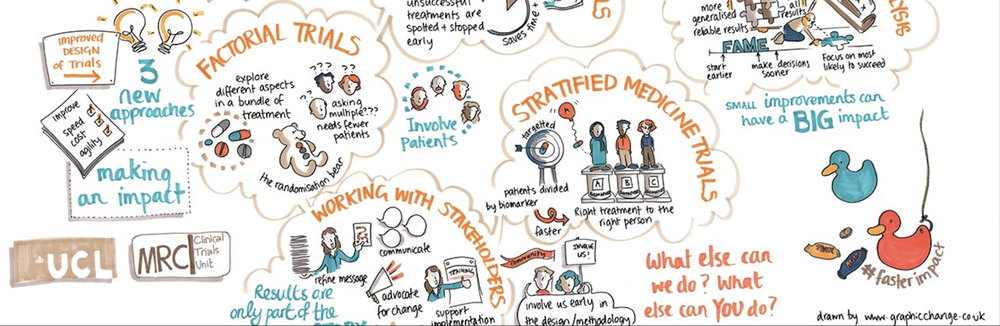
Webinar Series: MRC Clinical Trials Unit
Several webinars hosted by the MRC Clinical Trials Unit at University College London are available to follow free of charge.
Topics of previous webinars include:
- How to be a good trial manager
- How to be a good principal investigator
- Novel trial designs for old problems
- Developing funding applications
Provider: UCL
Cost: Free
Location: Online

Ethics in Epidemics, Emergencies and Disasters: Research, Surveillance and Patient Care
This eLearning course has been adapted entirely from the WHO training manual ‘Ethics in epidemics, emergencies and disasters: Research, surveillance and patient care’.
This seven module course offers comprehensive training exploring the wide range of ethical issues faced by health professionals and policy makers working in the context of epidemics/pandemics and disaster situations, focusing primarily on the key areas of research, surveillance and patient care.
This free to access course aims to provide clear background knowledge of the key subject areas and uses case studies as an effective way to explore the topics via realistic scenarios.
The estimated time commitment for this course is between 8 – 10 hours. Progress is automatically saved for each module so the course does not have to be completed in one attempt.
A certificate is issued once a minimum of 80% is achieved in the final quiz for each module.
Provider: Global Health Network
Cost: Free
Location: Online

